
Mobile WiFi Offload
Overview
Mobile WiFi Offload enables UE devices (smartphones) to utilize WiFi-based connectivity instead of cellular mobile connections. This technology serves as a strategic tool for Mobile Network Operators (MNOs) and Mobile Virtual Network Operators (MVNOs) to optimize their network operations and service offerings.
Key Benefits
Lower Cost-per-Bit
Particularly advantageous for MVNOs, this technology dramatically reduces variable costs associated with subscriber mobile data usage by routing traffic through proprietary WiFi networks. This approach is especially effective in low-mobility locations where most data consumption occurs, such as offices and homes.
Enhanced Indoor Coverage
WiFi Offload provides MNOs and MVNOs with a cost-effective solution to improve indoor coverage without the complexity and expense of small-cell deployments.
Service Differentiation
Operators worldwide leverage WiFi Offload to distinguish their service offerings from traditional MNO services by providing innovative features when users connect via WiFi, including:
- Unlimited data usage
- Free Voice over WiFi (VoWiFi)
- Premium content access
- Enhanced streaming capabilities
Architecture Options
There are several ways to implement Mobile WiFi Offload, depending on the level of integration desired with the mobile network infrastructure.
SIM-based WiFi Offload
This architecture leverages SIM card credentials for WiFi network authentication. The UE authenticates using quintuplets stored on the SIM card, which are validated against the mobile network's HSS database.
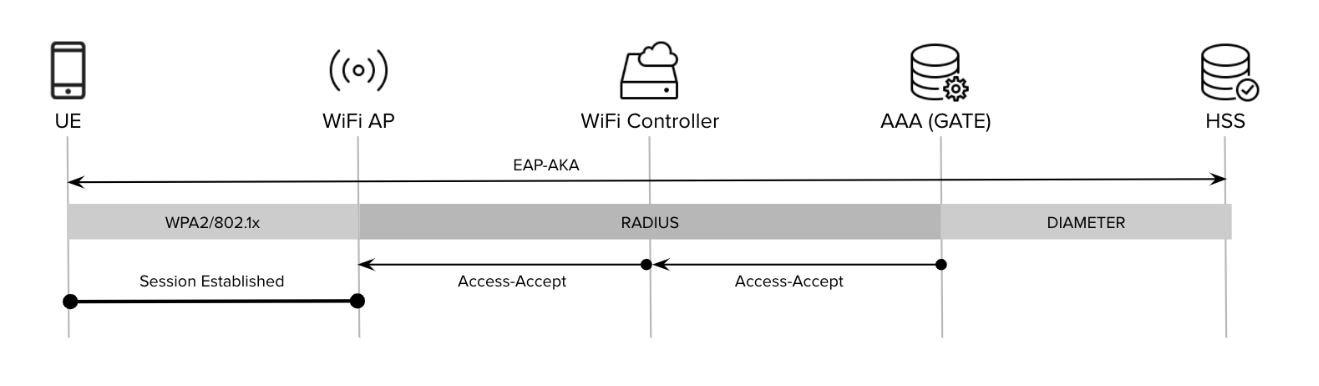
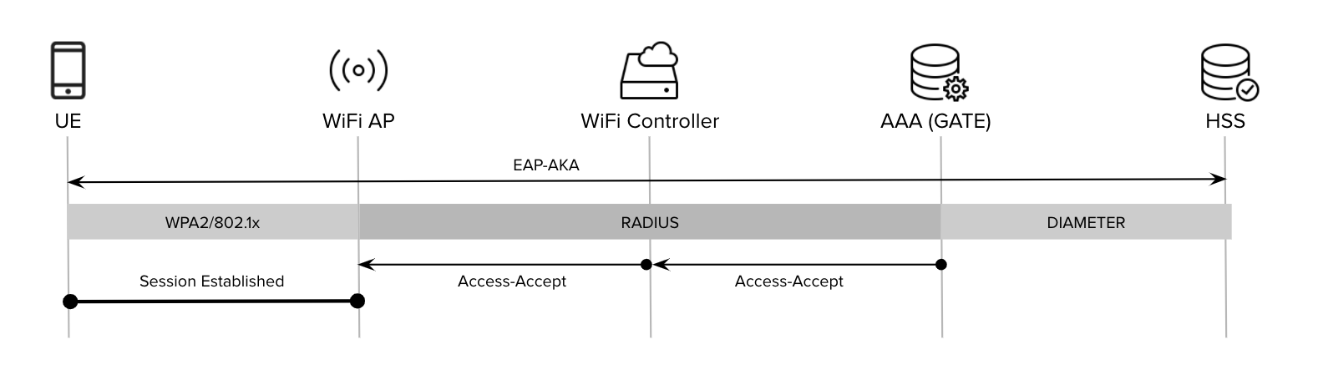
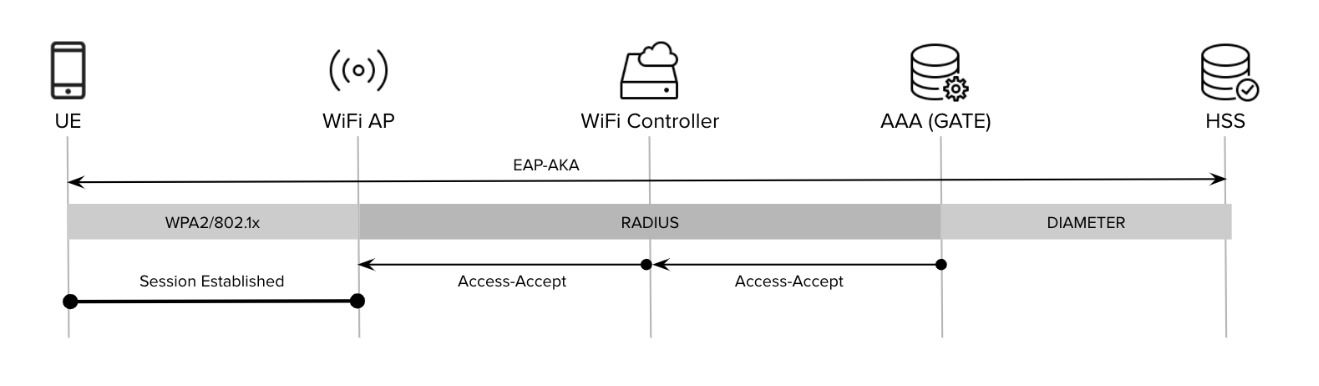
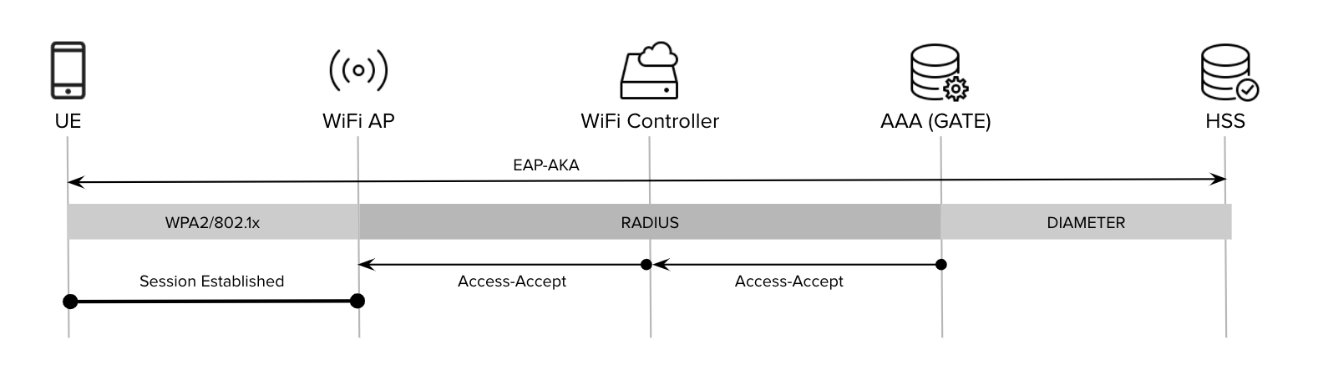
Note: The diagram above presents a simplified architecture (excluding WAG and WAG integration to mobile network PGW) for clarity.
Implementation Challenges
- UE Configuration Complexity: Requires sophisticated WiFi settings configuration on the device (EAP-AKA, EAP-SIM, and other protocols), typically necessitating a dedicated application or Mobile Device Management (MDM) system
- SIM Credential Management: Demands coordination and setup with both the mobile network HSS and SIM card manufacturer to properly configure quintuplets
Advantages
Once properly configured on the UE, WiFi offload operates seamlessly without requiring additional subscriber intervention.
EAP-based Authentication (UserID/Password)
This alternative approach proves particularly attractive for MVNO light deployments, implementing WiFi Offload through traditional UserID/Password authentication mechanisms.

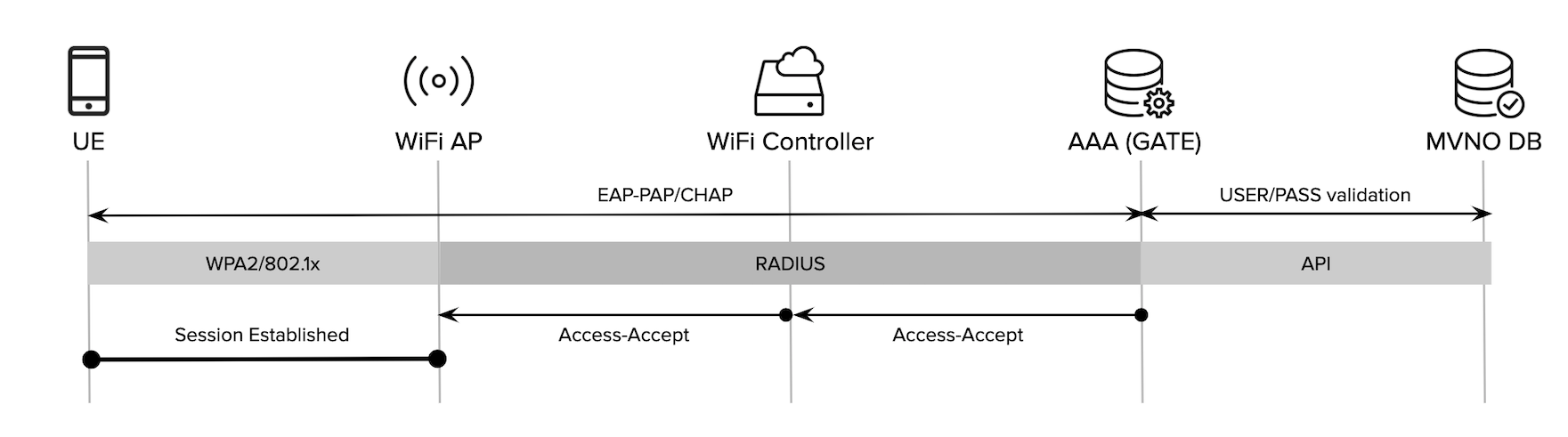
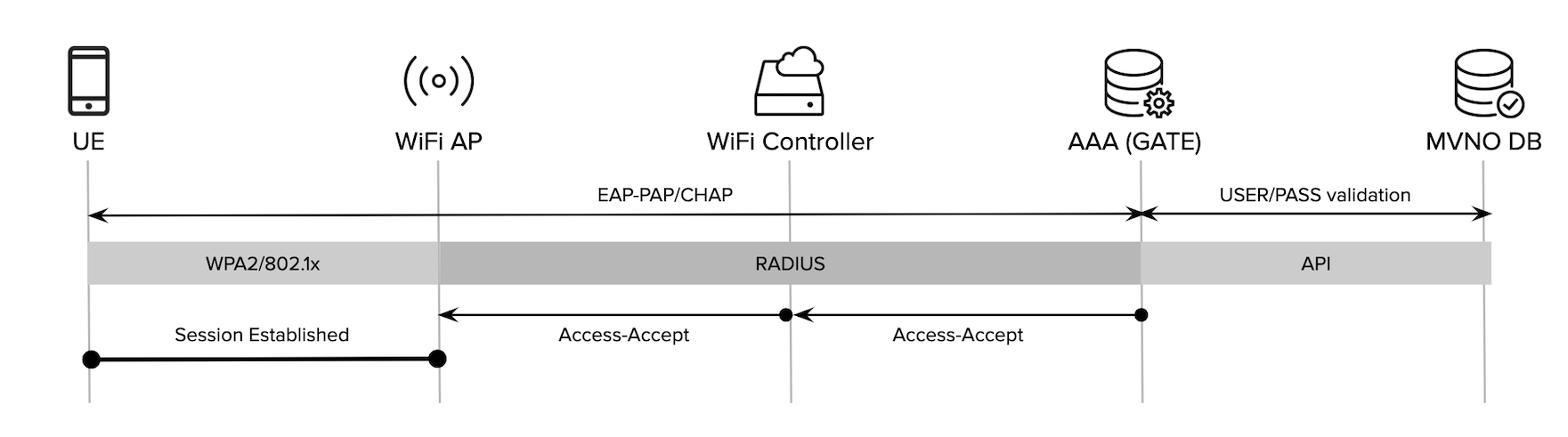
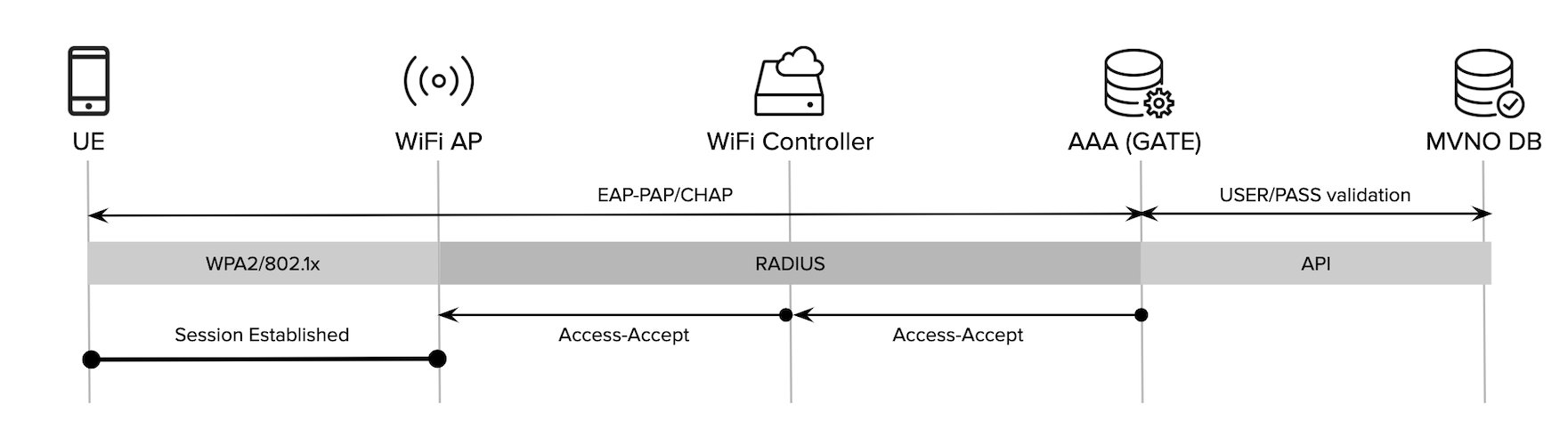
This architecture replaces SIM-based authentication with conventional UserID/Password validation against MVNO databases (CRM, AAA systems, etc.).
Implementation Challenges
- Manual UE Configuration: Subscribers must manually input UserID/Password credentials from the MVNO database, or rely on application-based or MDM configuration
- Credential Management: Password changes require subscribers to manually update their credentials on their devices
Advantages
- Simplified Setup: Streamlined integration process, particularly beneficial for MVNO light architectures
- Independent Control: Provides MVNOs with complete control over WiFi Offload implementation without requiring MNO coordination
- Flexible Management: Enables direct management of authentication credentials through existing MVNO systems
No comments to display
No comments to display