Results: Traffic per AP (GBytes)
Generating documentation...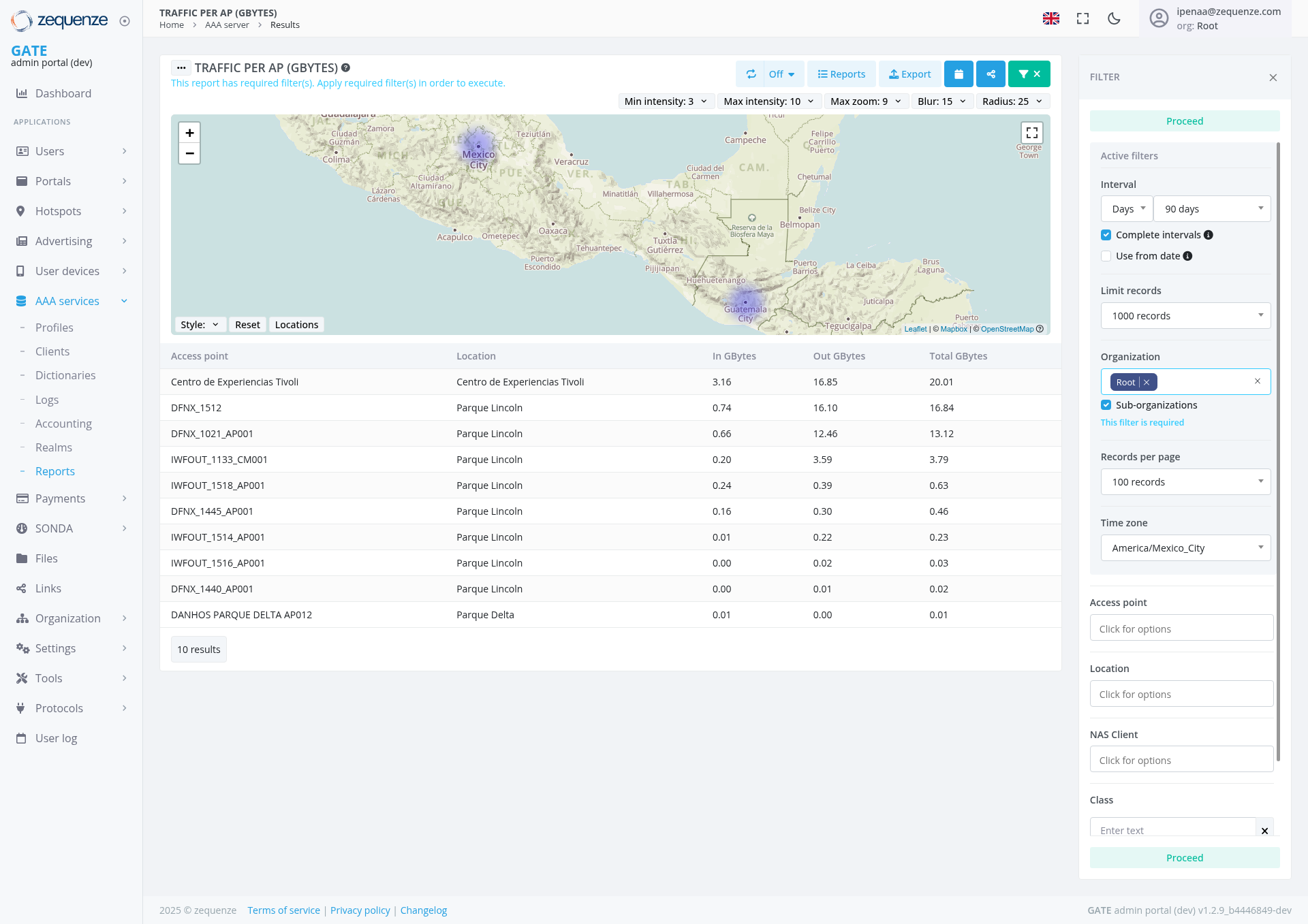
Overview
The Traffic per AP (GBytes) report provides a comprehensive view of data traffic usage across Access Points (APs) in your network infrastructure. This report displays both incoming and outgoing traffic data measured in gigabytes, with an interactive map visualization and detailed tabular data for network traffic analysis.
Key Features
Interactive Map Visualization: Geographic representation of access points with traffic intensity overlays
Real-time Traffic Monitoring: Displays current traffic data with configurable refresh intervals
Customizable Time Periods: Filter data by specific date ranges (currently set to 90 days)
Traffic Analysis: Separate columns for incoming, outgoing, and total traffic measurements
Export Capabilities: Options to export data and generate reports
Advanced Filtering: Multiple filter options for detailed data analysis
UI Elements
Map Controls
Zoom Controls: Plus (+) and minus (-) buttons for map navigation
Fullscreen Toggle: Expand map to full screen view
Style Selector: Change map visualization styles
Reset Button: Return to default map view
Locations Toggle: Show/hide location markers
Filter Panel (Right Side)
Interval Selector: Currently set to "Days" with 90-day period
Complete Intervals: Checkbox option for complete data intervals
Organization Filter: Set to "Root" with sub-organizations enabled
Records Per Page: Configurable display limit (100 records shown)
Time Zone: Set to America/Mexico_City
Access Point Filter: Dropdown for specific AP selection
Location Filter: Geographic location filtering options
NAS Client Filter: Network Access Server client filtering
Class Filter: Text input for classification filtering
Data Table
Access Point Column: AP names and identifiers
Location Column: Physical location of each access point
In GBytes: Incoming traffic data
Out GBytes: Outgoing traffic data
Total GBytes: Combined traffic totals
User Interactions
Filtering Data
Use the Interval dropdown to select time periods (Days, Weeks, Months)
Adjust the date range using the period selector (currently 90 days)
Toggle Complete intervals checkbox for comprehensive data sets
Select specific organizations or enable sub-organizations
Choose records per page limit for table display
Map Navigation
Use zoom controls to focus on specific geographic areas
Click locations on the map to view detailed AP information
Toggle between different map styles for better visualization
Use fullscreen mode for detailed geographic analysis
Data Export
Click the Export button to download current data set
Use Reports option to generate formatted reports
Share functionality available for collaborative analysis
Navigation
Breadcrumb Path: Home > AAA server > Results
Left Sidebar: Access through AAA services > Reports section
Main Menu: Located under Applications > AAA services in the admin portal
Data Displayed
The report shows traffic data for multiple locations:
Primary Locations
Centro de Experiencias Tívoli: Highest traffic volume (20.01 GB total)
Parque Lincoln: Multiple access points with varying traffic loads
Parque Delta: Lower traffic volume access points
Traffic Metrics
Incoming Traffic: Data received by each access point
Outgoing Traffic: Data transmitted from each access point
Total Traffic: Combined incoming and outgoing data
10 Results: Currently displaying first 10 access points
Actions Available
Data Management
Filter Results: Apply various filters to refine data display
Export Data: Download traffic data in various formats
Generate Reports: Create formatted reports for analysis
Refresh Data: Update display with latest traffic information
Visualization Options
Map Customization: Adjust intensity, zoom, blur, and radius settings
Style Changes: Modify map appearance and data representation
Time Range Adjustment: Change reporting periods for trend analysis
Notes/Tips
Filter Requirement: The system indicates "This filter is required" for organization selection
Data Completeness: Enable "Complete intervals" for more accurate reporting
Geographic Context: Use the map view to understand traffic patterns by location
Traffic Patterns: Monitor both incoming and outgoing traffic for comprehensive analysis
Time Zone Awareness: Ensure correct time zone setting for accurate temporal analysis
Performance: Limit records per page for better system performance with large datasets
Best Practices
Regularly monitor high-traffic access points for capacity planning
Use geographic visualization to identify coverage gaps or hotspots
Export data for historical trend analysis and reporting
Apply appropriate filters to focus on specific network segments or time periods
